Research questions. Technical execution. Commercial decisions.
Bench-credible scientific depth from wet-lab to bioinformatics, commercial leadership across EMEA-Asia, and agentic AI workspace design across technical, commercial data platforms. (About the practitioner)
Delivered as senior verification and validation on advisory mandates, often for consulting firms, expert networks, and other partners. Professional paths across EMEA and Asia, with trusted life-science networks across Europe and Korea. Fractional advisory or project-based, where it fits. NDA on request. Any of the services below can take the partnership shape that fits. (Explore partnership)
Experimental design & troubleshooting from wet-lab to bioinformatics across clinical, environmental, food-safety: NGS, molecular biology, cell, microbial, animal, field
Today a technical question (customer inquiry, internal R&D assessment, feasibility check) routes through a senior expert and waits two or three days for a reply. Sense 2026 turns that wait into minutes: one inquiry stays in one workspace across days, hand-offs, and reviewers. It runs on an ontology your AI agents act on, shaped to your sub-domain's taxonomy and your team's vocabulary. An inquiry past your risk threshold auto-routes for senior review; a missing field trips your block list before a draft leaves. Where general AI hands you a guess, every Sense answer carries its source and reliability tier. Year by year, your intelligence compounds.
What compounds is what you tune. Where many platforms keep configuration on the vendor side, all three layers stay with your team: catalogue, pricing, and approval rules tuneable in-house; reliability cut-offs and methodology toggles dialled inquiry by inquiry; deeper structure (classifier, risk patterns, scoring weights) architected with us via your advisor file. Pricing is flat per organisation, not per seat. Evaluation is free.
Open to teams ready to explore Sense at their own pace. You don't need to fit the prototype. The shared sandbox is a brainstorming canvas, not the final shape of your platform: your team sits around Sense, explores, and tells us what clicks (or doesn't). We build tailored solutions through back-and-forth, then deploy in steps. Bring your hardest workflow when the time feels right, and reach out→ to tell us where to start.
Working together
Different ways in.
Different ways to engage the practice areas: senior advisory for commercial or scientific verification/validation, co-building existing or new threads, or contract engineering on bounded scopes. Different doors, same workshop, same hands. (More about Dr. S Lee)
R&D or commercial leaders in biotech, genomics, diagnostics, or pharma who'd rather build something with someone than navigate alone. Two paths fit: shape an existing build (Sense 2026 is the active build, currently open for exploring teams and more topics in the pipeline), or co-create something new that complements the practice, around your own thesis about a tool, infrastructure, program, or service in life sciences. Several shapes are possible, from project collaboration to deeper alignment, with hands-on support for partnership development and project structuring along the way.
Engineer interested in shipping bounded scope across agentic AI tooling (active build: Sense 2026), database architecture and integration, or operations data platform work (LIMS, SAP, Power BI, SharePoint, or others). Comfortable in Python, R, Docker, or Git workflows. ML or AI background welcome but not required; strong craft in pipelines, schemas, system integration, or curation work is equally valuable. Paid contract engagement, collaboration credit. Domain context (biology, NGS, healthcare data) is a plus. First contracts are forming around active workstreams, with more in the pipeline.
A scientist who codes and speaks the domain vocabulary. The combination came from academia before (bio-)informatics existed: self-practicing R, Python, and Java at the bench set a fifteen-year through-line across research benches, regulatory bodies, and commercial leadership. Scientific work spans clinical, environmental, and food-safety domains, with peer-reviewed publications and EU Reference Laboratory studies from wet-lab to bioinformatics. Commercial work covers EMEA market entry, partnerships, pricing, forecasting, and sales direction, leading multidisciplinary teams across sales, project management, lab, bioinformatics. Across both tracks, the combination shaped digital infrastructure (genomic reference database, biobank, LIMS, SAP) and organization-wide documentation and compliance system under ISO 17025/9001. Operational vocabulary came from holding each role in the chain (bench scientist, bioinformatician, ops executive, commercial lead), forming the translation layer that fits each context, not one-size-fits-all, now in senior advisory (Partnership) and agentic AI tooling (Sense 2026).
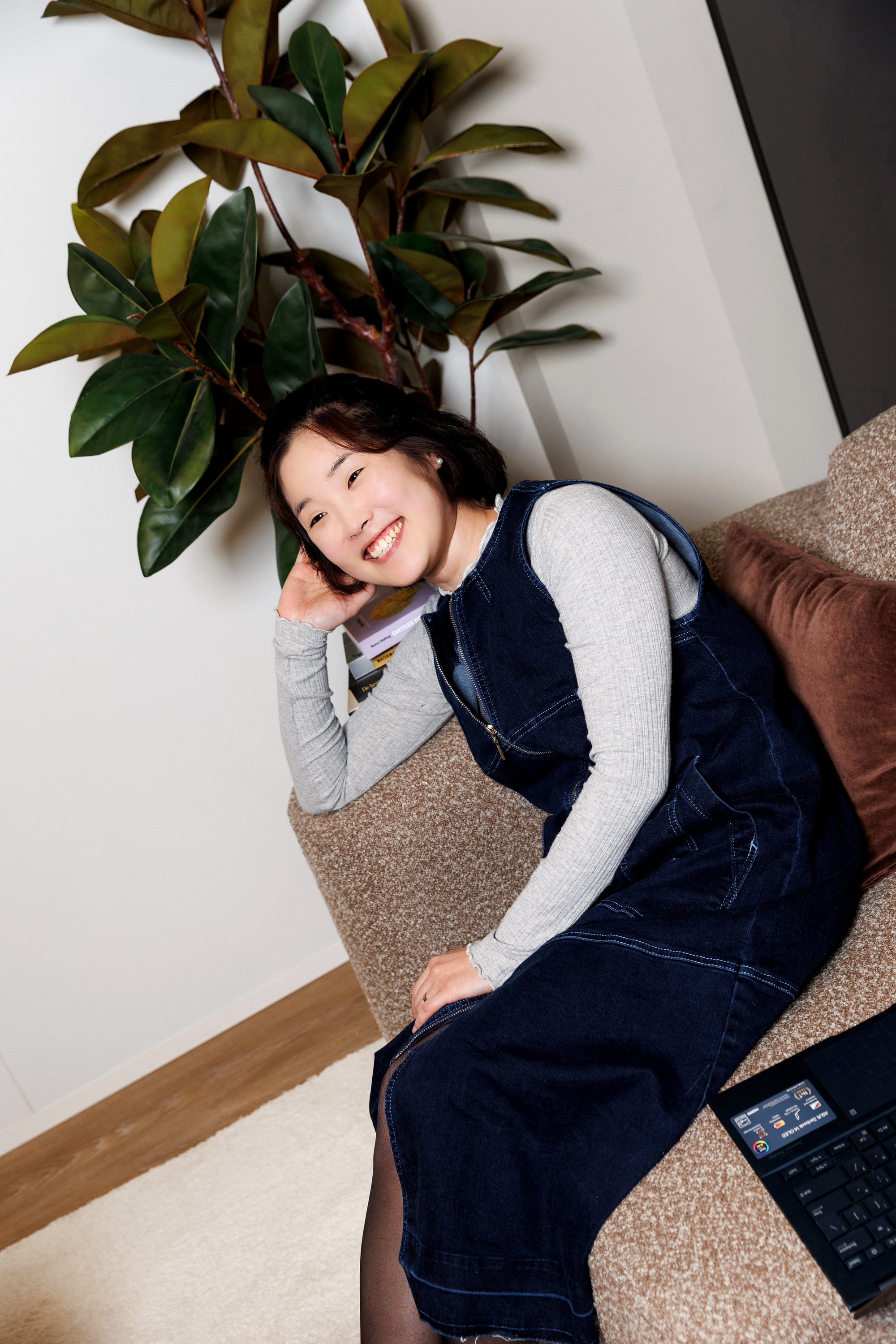
Seungeun Lee, PhD
Founder & Principal
Dr. S Lee Life Sciences
May 2026 – Current
Independent practice based in the Netherlands, engaging as senior advisor with consulting firms and expert networks across three overlapping areas (commercial strategy and partnerships, technical and scientific advisory, and digital infrastructure tailored to each team's stack), alongside agentic AI workspace design for teams ready to build. Fifteen years across EMEA and Asia, in professional English with trusted life-science networks across Europe and Korea, supporting biotech and the broader research ecosystem.
Education
PhD, Public Health
Seoul National University · 2016
MSc, Molecular Medicine and Biopharmaceutical Science
Seoul National University · 2013
BSc, Food and Nutrition BSc, Biology
Yonsei University · 2011
Also: ISO 17025 auditing · IATA DGR · Big Data Insight · Linux for Biologists
ScientificCommercialBoth
NowUSDA WHNRCResearch AssistantGenome Research Center, Seoul National University HospitalMSc ResearcherEnvironmental Health Eng. Lab, SNUPhD ResearcherPlanbureau voor de LeefomgevingGuest ResearcherWageningen Food Safety ResearchResearcher Genomics · Data ScientistMacrogen EuropeSenior PM · Head of Project ManagementBuilders Studio B.V.Entrepreneur in ResidenceDr. S Lee Life SciencesFounder & Principal
20092013201720212026
Scientific & technical
Commercial & strategic
Commercial Leadership2021 – 2026
Mar 2026 – May 2026
Builders Studio B.V.
Entrepreneur in Residence
Domain research, ICP definition, and customer development for an early-stage AI SaaS exploration in life sciences. Mapped senior buyer dynamics and market entry mechanisms across R&D and biotech services globally.
Rotterdam, Netherlands
Both tracks
Feb 2021 – Feb 2026
Macrogen Europe
Senior Project Manager · Head of Project Management
EMEA commercialization of scientific innovations. B2B/B2C partnerships, pricing and branding strategy, fiscal planning, revenue forecasting. Key user for the in-house developed LIMS, bridging laboratory method logic and IT scripts. ISO-compliant systems and LIMS-based documentation. Reporting infrastructure with SAP and Power BI. Multidisciplinary leadership across sales, project management, lab operations, and bioinformatics.
Amsterdam, Netherlands
Research & Regulation2009 – 2021
Jan 2017 – Jan 2021
Wageningen Food Safety Research (WFSR) Stichting Nederlandse Voedsel- en Warenautoriteit (NVWA)
Researcher Genomics · Data Scientist
Genomic surveillance of food-borne pathogenic microbes using Illumina and Nanopore sequencing, with Python, R, Docker, and Git workflows. EU Reference Laboratory inter-laboratory studies and proficiency-test evaluations on Shiga toxin–producing and pathogenic E. coli, and Listeria monocytogenes. Lead key user for the LabVantage LIMS: designed method logic and taxonomy, led the LIMS integration, and built the biobank database architecture behind it (RDBMS, Python, Jupyter).
Wageningen, Netherlands
Apr 2016 – Oct 2016
Planbureau voor de Leefomgeving (PBL) Netherlands Environmental Assessment Agency
Guest Researcher
Curated metadata to refine the GLOBIO-Aquatic Projection model. Applied R for variable analysis, regression modelling, and dataset alignment.
Bilthoven, Netherlands
Mar 2013 – Feb 2016
Environmental Health Engineering Lab Seoul National University
PhD Researcher, Public Health
Built a laboratory from the ground up to optimize in vitro and in silico workflows. Refined NGS data with bioinformatics tools to identify environmental pathogens and improve microbial molecular identification.
Seoul, Korea
Mar 2011 – Feb 2013
Genome Research Center for Diabetes and Endocrine Disease Seoul National University Hospital
MSc Student Researcher, Molecular Medicine and Biopharmaceutical Science
Molecular and clinical research on diabetes and endocrine disease. Cell culture, differentiation, and drug treatments. Animal handling for in vivo studies. qPCR, bioluminescent assays, immunoblotting, and protein extraction. Cloning workflows including DNA fragment design, insertion, and digestion.
Seoul, Korea
Jul 2009 – Dec 2009
Western Human Nutrition Research Center - USDA University of California, Davis
Research Assistant
Undergraduate research placement supporting nutrition and health studies. Handled laboratory equipment, chemicals, and animal models for in vivo nutrition research.
Hoek A & Lee S, van den Berg R, Rapallini M, Overbeeke L, Opsteegh M, Bergval I, Wit B, van der Weijden C, van der Giessen J, van der Voort M.
(2023). Virulence and anti-microbial resistance of Shiga toxin-producing Escherichia coli from goat and sheep dairy farms in the Netherlands. Journal of Applied Microbiology.
Lee S, An C, Xu S, Lee SH, Yamamoto N.
(2016). High-throughput sequencing reveals unprecedented diversities of Aspergillus species in outdoor air. Letters in Applied Microbiology. DOI: 10.1111/lam.12608.
Xu S, An C, Kim S, Lee S, Lee K, Yamamoto N.
(2016). Effects of the biocides on the culturable house dust-borne bacterial compositions and diversities. Human and Ecological Risk Assessment. 22(5): 1133-1146.
Lee S, Yamamoto N.
(2015). Accuracy of the high-throughput amplicon sequencing to identify species within the genus Aspergillus. Fungal Biology. 119(12): 1311-1321.
Lee S, Xu S, C.P. B, Lee H, Park MS, Lim YW, Yamamoto N.
(2015). Triazole susceptibilities in thermotolerant fungal isolates from outdoor air in the Seoul Capital Area in South Korea. PLoS ONE. 10(9): e0138725. DOI: 10.1371/journal.pone.0138725.
Lee S, Kang S, C.P. B, Yoon C, Yang J, Yamamoto N.
(2015). Removal of viable airborne fungi from indoor environments by benzalkonium chloride-based aerosol disinfectants. Human and Ecological Risk Assessment. 21: 2174-2191.
Lee SE, Koo YD, Lee JS, Kwak SH, Jung HS, Cho YM, Park YJ, Chung SS, Park KS.
(2015). Retinoid X receptor α overexpression alleviates mitochondrial dysfunction-induced insulin resistance through transcriptional regulation of insulin receptor substrate 1. Molecules and Cells. 38(4): 356-361.
Commercial and market intelligence
Business performance, market analysis, and BI dashboards
Lee S.
(2026). From Data to Decisions: NGS Business Performance Intelligence and 2026 Strategy Blueprint. Macrogen Europe internal.
Lee S.
(2026). NGS Master Dashboard: Year Report 2025. Macrogen Europe internal Power BI dashboard.
Inter-laboratory proficiency studies
Proficiency testing and cross-laboratory evaluations
Lee S, Kook J, Kim J.
(2023–2025). Macrogen Europe data submission for: DNA Sequencing - NGS (v Germline). European Molecular Genetics Quality Network (EMQN).
Lee S.
(2024). Interlaboratory testing at Macrogen: Whole genome, Targeted, and Transcriptome sequencing. Macrogen Europe internal.
Lee S, van der Voort M.
(2020). WFSR data submission for: Global Microbial Identifier Proficiency Test 2017. National Food Institute, Technical University of Denmark (DTU Food).
Lee S, van der Voort M.
(2020). Evaluation on the first inter-laboratory exercise on Whole Genome Sequencing of Shiga toxin-producing Escherichia coli strains 2017-2018 (PT-WGS1). Wageningen Food Safety Research (WFSR) internal validation report for EURL submission.
Lee S, van der Voort M.
(2020). Evaluation on the 23rd inter-laboratory study (PT23) on the identification and typing of Shiga toxin-producing E. coli (STEC) and other pathogenic E. coli strains, 2018-2019. Wageningen Food Safety Research (WFSR) internal validation report for EURL submission.
Lee S, van der Voort M.
(2020). Evaluation on the 26th inter-laboratory study (PT26) on the identification and typing of Shiga toxin-producing E. coli (STEC), 2019. Wageningen Food Safety Research (WFSR) internal validation report for EURL submission.
Technical and method validation reports
Method development, validation, and QC workflows
Lee S, Kook J, Kim J. (2021–2025). NGS Test Method Validation Report: Targeted sequencing. D-NGS-009. Macrogen Europe internal (ISO 17025).
Lee S, Kook J, Kim J. (2025). Internal testing: SureSelect Clinical Research Exome v4. Macrogen Europe internal.
Lee S. (2024). NGS Technical Support Guide, v20240704. Macrogen Europe internal.
Lee S, Park G, Kook J, Kim J. (2023). NGS Low input RNA kit testing: Watchmaker vs. Illumina. Macrogen Europe internal.
Lee S. (2022). NGS Technical Support: PacBio SMRT. Macrogen Europe internal.
Lee S. (2022). NGS Technical Support Guide, v20220315. Macrogen Europe internal.
Lee S. (2021). NGS Technical Support: Single Cell. Macrogen Europe internal.
Lee S. (2021). NGS Technical Support: Metagenome. Macrogen Europe internal.
Lee S. (2021). NGS Technical Support: Sample preparation. Macrogen Europe internal.
Lee S, van der Voort M. (2020). WGS Quality control: BaseClear reads reporting failure in the Per base sequence content. N200100. Wageningen Food Safety Research (WFSR) internal.
Lee S, Bak A, van der Voort M. (2020). Onderzoeksrapport: Optimization of Nanopore whole genome sequencing. Assembly assessment. R200086. Wageningen Food Safety Research (WFSR) internal.
Lee S, van der Voort M. (2020). Onderzoeksrapport: Implementing the trim workflow for the quality control of whole genome sequencing reads. R200057. Wageningen Food Safety Research (WFSR) internal.
Lee S, van der Voort M. (2020). Onderzoeksrapport: Implementing cross-contamination workflow for the quality control of Escherichia coli WGS data sets. R200056. Wageningen Food Safety Research (WFSR) internal.
Lee S, Castelijn G, van der Voort M. (2020). Onderzoeksrapport: Setting cut-off values for the quality control of Listeria monocytogenes WGS data sets. R190130. Wageningen Food Safety Research (WFSR) internal.
Lee S, van der Voort M. (2019). Onderzoeksplan: Optimization of the use of Nanopore whole genome sequencing. N190072. Wageningen Food Safety Research (WFSR) internal.
Lee S, Rapallini M, Bak A, van der Voort M. (2019). Onderzoeksrapport: Implementation of the Oxford Nanopore Sequencer MinION for Whole Genome Sequencing. R190021. Stichting Nederlandse Voedsel- en Warenautoriteit (NVWA) internal.
Lee S. (2019). Biobank database update manual. Stichting Nederlandse Voedsel- en Warenautoriteit (NVWA) internal.
Lee S, van den Berg R, van der Voort M. (2018). Onderzoeksrapport: Implementatie bioinformatica workflows voor (Shiga Toxin-producing) Escherichia coli. R180034. Stichting Nederlandse Voedsel- en Warenautoriteit (NVWA) internal.
Lee S. (2017). LV8.T.Biobanking User Manual. Stichting Nederlandse Voedsel- en Warenautoriteit (NVWA) internal.
Conference presentations
Selected talks · awards where noted
Lee S. Biobank training: working with scripts. Wageningen Food Safety Research, Wageningen, Netherlands. Jul 30, 2020.
Lee S. Effects of global temperature change on freshwater fish: temperature sensitivity of freshwater fish. GLOBIO meeting, PBL Netherlands Environmental Assessment Agency, Bilthoven, Netherlands. Aug 30, 2016.
Lee S, Yamamoto N. Transcriptome analysis of Aspergillus fumigatus exposed to triazole fungicides by RNA-Seq. 2nd BK Plus CHEER International Workshop, Seoul National University, Seoul, South Korea. Feb 14, 2016.
Lee S. Identifying the risks of triazole chemical uses on environmental fungal communities and properties. Graduate Research Competition, Graduate School of Public Health, Seoul National University, Seoul, South Korea. Mar 6, 2015. Awarded
Lee S, Xu S, C.P. B, Lee H, Park MS, Lim YW, Yamamoto N. Detecting triazole-resistant fungi from ambient air in Seoul, South Korea. 1st BK Plus CHEER International Workshop, Seoul National University, Seoul, South Korea. Feb 2, 2015. Awarded
Lee S, Kang S, C.P. B, Yoon C, Yang J, Yamamoto N. Removal Effects of Benzalkonium Chloride-based Aerosol Disinfectants on Indoor Airborne Fungi. International Aerosol Conference, Busan, South Korea. Sep 2, 2014.
Lee S. Current Issue on Aerobiology and Allergy: An Environmental Approach to Public Health. Global Talent Program Workshop, UN Environmental Programme, Bangkok, Thailand. Jun 28, 2013.
Lee S, Yamamoto N. NGS-based study of fungal allergy. Epidemiological analyses of Environment Seminar, Asan Medical Center, Seoul, South Korea. Jan 8, 2013.
Lee S, Chung SS, Ahn BY, Koo YD, Park KS. Quantitative recovery of IRS1 with RXR α activation in mitochondrial dysfunction associated insulin resistance. International Conference on Diabetes and Metabolism, Seoul, South Korea. Nov 10, 2012. Awarded
Let's talk
Whichever way works for you.
Every channel reaches me directly, with replies usually within two working days. Write or speak in any language. A real clue to a problem usually carries across whatever language it arrives in.